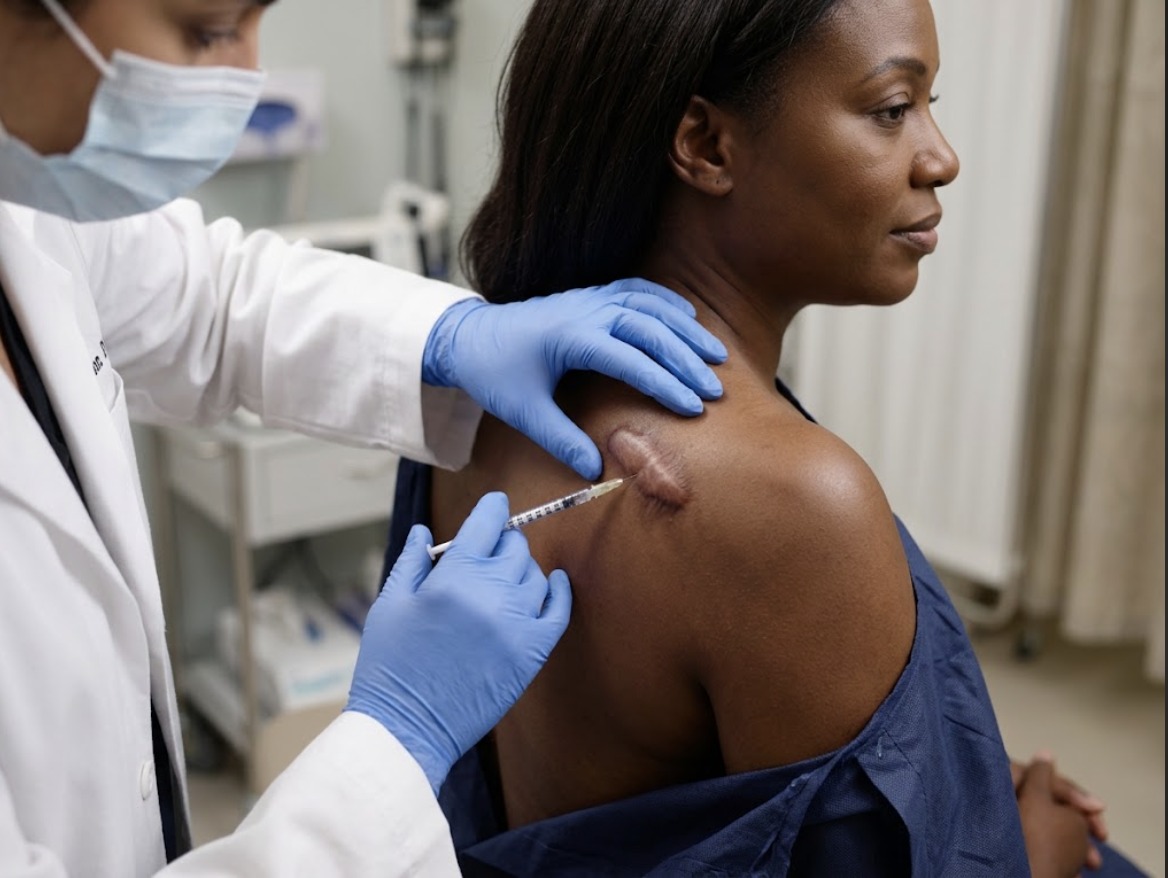
Pain is often the first concern people have before treating a raised keloid scar. Keloid injections can cause brief stinging, pressure, or burning, especially when medication is placed into thick, firm scar tissue. Experiences vary, and comfort measures may help make treatment easier to tolerate.
At DSC Laser & Skin Care Center, we approach keloid treatment with careful evaluation, experienced medical guidance, and attention to both results and patient comfort. If you are considering keloid injections in San Gabriel or Los Angeles, understanding what the procedure feels like, how it works, and what to expect afterward can help you make a more informed decision.
What You’ll Learn From This Article
- Why keloid injections can feel uncomfortable
- How corticosteroid injections work inside scar tissue
- What may affect pain during treatment
- Which comfort measures may be considered
- What to expect after treatment and between sessions
- When other keloid treatment options may be discussed
What Is a Keloid Scar?
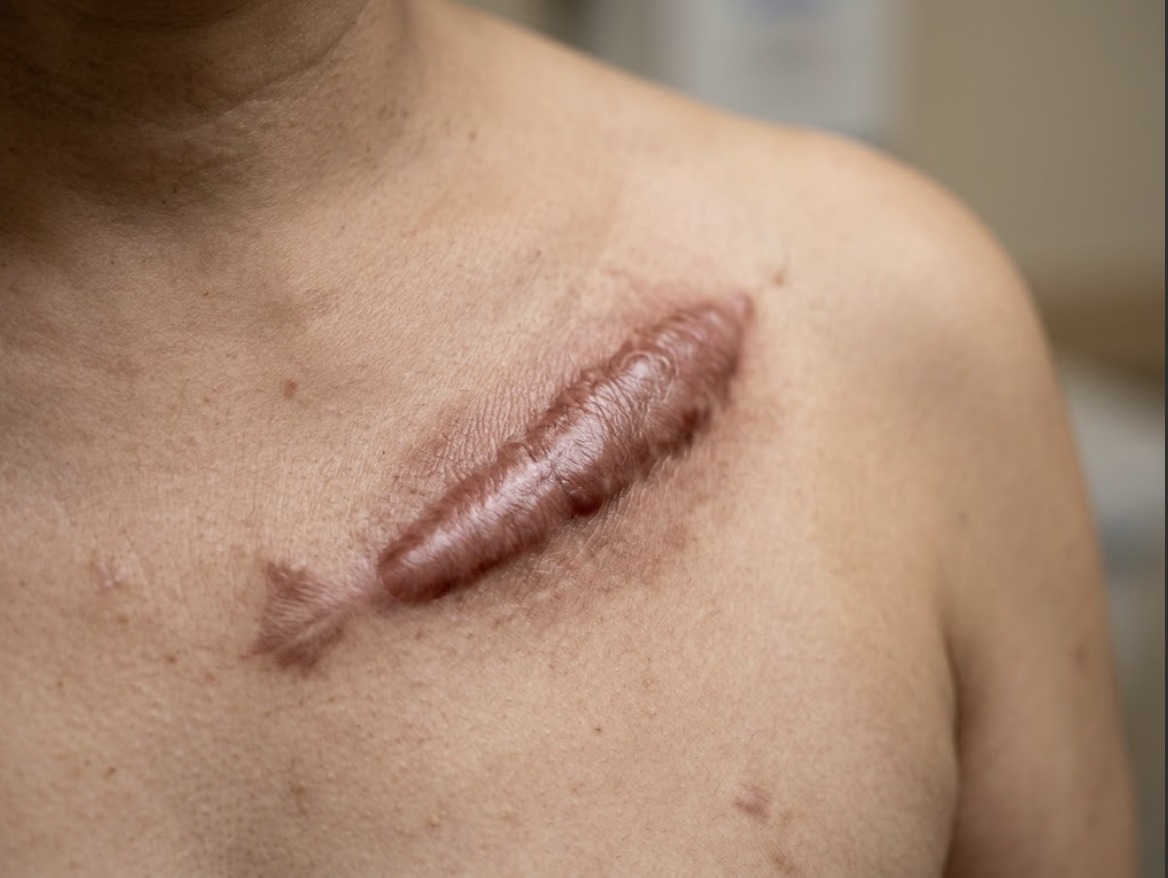
A keloid develops when the body produces more scar tissue than needed during wound healing. Instead of staying within the original injury, the scar can continue growing beyond its borders.
Keloids may develop after acne, surgery, piercings, burns, tattoos, cuts, insect bites, or other skin injuries. They can feel firm or rubbery and may cause itching, tenderness, tightness, or pain.
Keloid Scars vs. Hypertrophic Scars
Keloids and hypertrophic scars are different.
A hypertrophic scar stays within the boundaries of the original wound and may become less noticeable with time. A keloid extends beyond the original injury and usually does not shrink on its own.
According to StatPearls through the National Library of Medicine, both conditions involve abnormal collagen activity, but their growth patterns and clinical behavior differ.
That distinction matters because the correct diagnosis influences which scar treatment may be appropriate.
Why Evaluation Matters
Assess a raised scar before treatment. Your provider may consider when the scar appeared, how quickly it has grown, whether it extends past the original wound, what symptoms it causes, and whether you have tried previous therapies.
Some skin conditions can resemble keloids, so treatment should begin with a clear clinical assessment rather than an assumption.
Once the scar has been properly evaluated, the next question is how injection therapy may help.
How Do Keloid Injections Work?
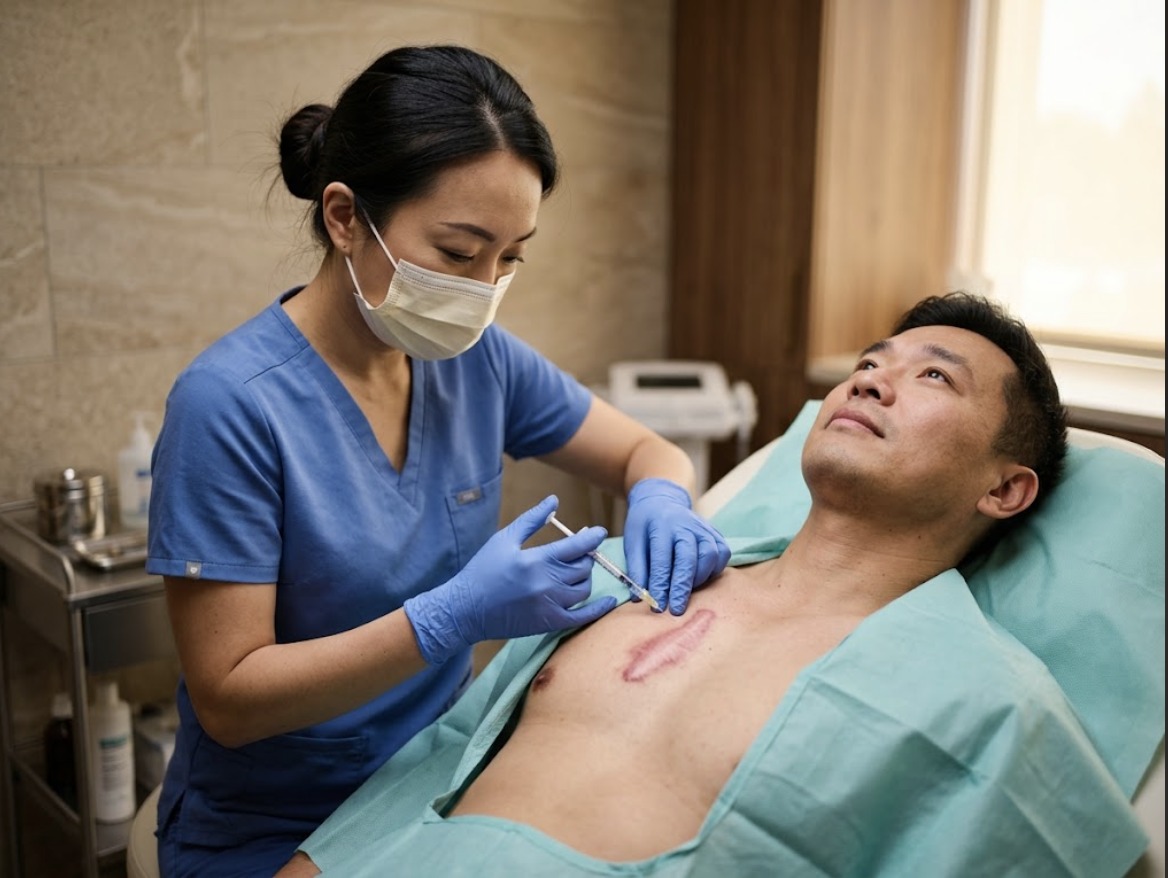
Keloid injections place medication directly into the scar rather than treating only the skin surface. One of the most commonly used approaches is an intralesional corticosteroid injection.
Corticosteroid Injection Therapy
Corticosteroids can reduce inflammation and interfere with the processes that contribute to excessive collagen production. Over time, this may soften a keloid, reduce its thickness, flatten some raised scar tissue, and improve symptoms such as itching or tenderness.
Triamcinolone is a corticosteroid commonly discussed in medical literature for keloid treatment.
The goal is not to erase the scar immediately. Instead, the medication works within the scar tissue over time, and improvement varies by person.
Why More Than One Session May Be Needed
Keloids often require repeated treatment.
Intralesional steroid injections may be scheduled several weeks apart, with timing adjusted according to the scar’s size, thickness, location, and response. Some scars soften steadily, while others may need additional treatment methods.
DSC also notes that treatment schedules can differ considerably from patient to patient.
Understanding that keloid therapy often takes time makes the pain question easier to put into context.
Do Keloid Injections Hurt?
Yes, keloid injections can hurt, but the level of discomfort is different for everyone.
Some patients describe a brief pinch as the needle enters the skin. Others notice pressure, stinging, or burning as the medication moves into the keloid.
A 2025 scoping review published in BMJ Open found that pain during intralesional corticosteroid injections is a recognized concern and can influence whether patients continue treatment.
Where the Discomfort Comes From
There are several possible sources of discomfort during a keloid injection:
- The needle entering the skin or scar
- Pressure as medication enters dense scar tissue
- Brief soreness after the injection
A keloid can be much firmer than surrounding skin because of the amount and structure of collagen within the scar. Injecting medication into that dense tissue may require more pressure than a routine injection into softer tissue.
How Long Does the Pain Last?
The strongest sensation usually occurs during the injection itself.
Scar location, thickness, treatment technique, medication volume, and individual pain sensitivity can all change how an injection feels.
The next important question is why one keloid may be much more sensitive than another.
Why Do Some Keloid Injections Hurt More?
No single pain level applies to every keloid injection. Several factors can affect the experience.
Scar Thickness and Firmness
A thick keloid contains dense scar tissue. Medication may be harder to distribute through the central portion of a firm scar, which can increase pressure during injection.
A clinical study examining a modified injection technique described conventional injections into dense keloid tissue as painful for some patients and found lower pain scores with an alternate technique in the study population.
As a scar softens during treatment, later injections may sometimes feel different.
Treatment Location
Keloids commonly develop on the ears, chest, shoulders, back, cheeks, and other areas that have experienced skin injury.
Each area has different nerve sensitivity, skin thickness, and tissue tension. A small earlobe keloid may feel different from a broad chest scar.
Personal Pain Sensitivity
Pain perception varies considerably.
Some people tolerate injections easily, while others are more sensitive to needles, pressure, or burning sensations. A keloid that already feels tender or itchy may also be more sensitive during treatment.
Knowing these factors allows the provider to discuss practical ways to improve comfort.
How Can Discomfort During Keloid Injections Be Reduced?
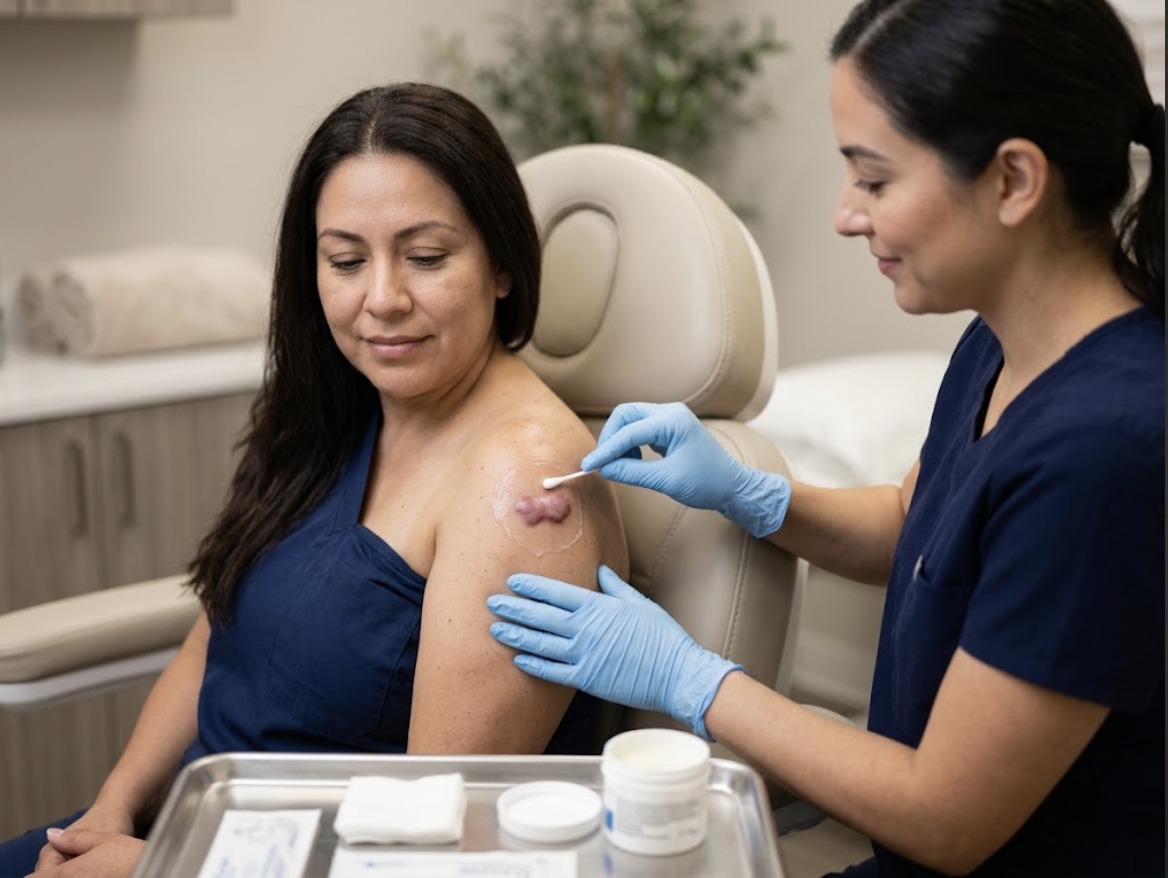
Comfort planning should be individualized. The best option depends on the scar, the injection method, and your sensitivity.
Local Anesthetic and Numbing Options
DSC notes that local anesthetic may reduce discomfort during keloid injections. Topical numbing medication may also be considered for patients who are particularly sensitive to injections.
These methods may reduce pain, but they should not be described as making every procedure painless.
Other Comfort Techniques
Medical research has also examined approaches such as:
- Cooling the treatment area
- Using topical anesthetic
- Local anesthetic injections
- Vibration
- Slower medication delivery
- Modified injection techniques
Not every method is appropriate for every scar.
The best approach depends on the keloid’s size and location, the medication used, your treatment history, and the provider’s clinical judgment.
Once the injection is complete, attention shifts to how the scar responds over the following days and weeks.
What Should You Expect After a Keloid Injection?
Keloid treatment is gradual. A corticosteroid injection does not typically flatten a scar immediately.
Temporary tenderness or soreness may occur after the procedure. Your provider should explain what to expect and when to contact the office if something feels unusual.
| What to Expect | General Guidance |
|---|---|
| Right after treatment | Mild tenderness, soreness, or sensitivity may occur |
| Over the next few weeks | The scar may gradually become softer or flatter |
| Follow-up visits | Additional injections may be recommended |
| Symptom changes | Itching or tenderness may improve in some patients |
| Long-term response | Results vary, and recurrence can occur |
Results Develop Over Time
Corticosteroid injections work by affecting inflammation and collagen activity within the scar.
Some keloids respond with gradual softening or flattening. Others may change more slowly or require several treatment sessions.
No responsible treatment plan should promise complete removal or permanent results.
Possible Side Effects
Intralesional corticosteroid injections have recognized risks.
Possible local side effects can include:
- Skin thinning or atrophy
- Changes in skin pigmentation
- Small visible blood vessels
- Local tissue changes around the injection site
These effects do not occur in every patient, but they should be part of the treatment discussion.
Because keloids can behave differently from person to person, treatment sometimes needs to go beyond steroid injections alone.
What If Steroid Injections Are Not Enough?
Keloids can be persistent, and no single therapy works best for every scar.
Your provider may consider other treatments if the scar doesn’t respond well to steroid injections or if its size, location, or history suggests a different approach.
Other Treatments for Keloids
Depending on the situation, keloid treatment may involve:
- Silicone gel or silicone sheets
- Compression therapy
- Cryotherapy
- Laser treatment
- Other injectable therapies
- Surgery in selected cases
- A combination of approaches
Silicone gel is commonly used as a topical scar management option. Cryotherapy may help with selected keloids, while laser therapies can sometimes be incorporated into a broader scar treatment plan.
Surgical removal can be considered in certain cases, but keloids can return after surgery, which is why surgery may be paired with other therapies.
Why Personalized Planning Matters
A small, newer keloid does not necessarily need the same approach as a large scar that has returned after previous treatments.
DSC’s treatment philosophy emphasizes individualized planning and careful procedure selection rather than relying on a one-size-fits-all approach.
That makes provider experience particularly important when deciding where to receive care.
Choosing Keloid Injections in San Gabriel and Los Angeles

If you are considering keloid injections in San Gabriel or Los Angeles, look beyond the injection itself.
A thorough consultation should address:
- Whether the scar is a true keloid
- How long it has been present
- Whether it causes pain or itching
- Previous treatments
- Expected treatment frequency
- Possible side effects
- Risk of recurrence
- Other scar therapies that may be appropriate
DSC Laser & Skin Care Center serves patients in San Gabriel, Los Angeles, and nearby communities. The practice emphasizes experienced medical oversight, continued staff education, updated treatment methods, and personal attention.
DSC’s board-certified physician has more than 30 years of experience, and the center’s approach focuses on careful treatment planning while reducing discomfort and recovery time when possible.
Those factors can help you compare your options with more than price or convenience in mind.
What You Should Know Before Scheduling Keloid Injections
The main takeaway is simple. Keloid injections can be uncomfortable, especially when the scar is thick and firm, but the discomfort is usually temporary and may be managed with appropriate comfort measures.
Corticosteroid injections may help soften or flatten a keloid and reduce symptoms such as itching, but treatment response varies.
Several sessions may be required. Side effects are possible. Recurrence can also occur.
Other treatments, including silicone gel, cryotherapy, laser treatment, compression, or selected surgical approaches, may be considered when appropriate.
A careful assessment gives you the clearest picture of what your scar may need and what you can reasonably expect from treatment.
Frequently Asked Questions About Keloid Injections
1. Are keloid injections very painful?
Keloid injections can cause stinging, pressure, burning, or brief pain. Thick scar tissue may be more uncomfortable to inject because medication has to move through dense collagen. Discomfort varies, and you may consider numbing or other comfort measures.
2. How many keloid injections will I need?
There is no standard number for every patient. Treatment may involve several injections spaced weeks apart. Your provider may adjust the schedule based on the keloid’s size, thickness, location, and response.
3. How quickly do steroid injections flatten a keloid?
Changes usually happen gradually. A keloid may soften or flatten over several weeks or after multiple treatment sessions. Results vary, and some scars respond better than others.
4. Can a keloid come back after injections?
Yes. Keloids can recur after treatment. Corticosteroid injections may reduce the size or activity of the scar, but they cannot guarantee that it will never return.
5. Are laser treatments or silicone gel better than keloid injections?
No single treatment works best for every keloid. Steroid injections, silicone gel, cryotherapy, laser treatment, compression, and other therapies may serve different purposes. The right option depends on the scar’s size, location, symptoms, history, and previous treatments.
A More Informed Approach to Keloid Treatment
Concern about pain should be part of the conversation before treating a keloid, not something you are expected to ignore.
Keloid injections can cause temporary discomfort, but treatment can often be planned with measures that improve comfort. Just as important, your provider should properly assess the scar so they can explain the expected benefits, limitations, risks, and possible alternatives.
If a raised or persistent scar is bothering you, you can request a consultation with DSC Laser & Skin Care Center in San Gabriel. Our team can assess the area, discuss your concerns about discomfort and recovery, and help determine whether keloid injections or another scar treatment approach may be appropriate for you.