Loose skin along the jawline, under the chin, or on the neck can become more noticeable over time. Many people reach a point where skincare products no longer provide the level of firmness they want, but surgery still feels like a bigger step than they are ready to take.
If you have been researching what is Ultherapy, you are likely looking for a non-invasive skin tightening treatment that can support firmer, tighter skin with little to no downtime. Ultherapy and Ultherapy Prime use focused ultrasound energy to stimulate collagen beneath the skin’s surface, helping improve skin firmness gradually over time.
At DSC Laser and Skincare Center, we work with patients throughout Los Angeles who want natural-looking improvement, experienced guidance, and treatment plans designed around long-term skin health rather than short-term trends.
What You’ll Learn From This Article
- How Ultherapy and Ultherapy Prime use ultrasound technology to tighten and lift the skin
- Which treatment areas are most commonly addressed
- What the Ultherapy procedure typically feels like
- Common side effects and recovery expectations
- How many Ultherapy treatments may patients need
- What can affect the cost of Ultherapy in Los Angeles
- Who may be a good candidate for non-surgical skin tightening
What Is Ultherapy and How Does It Work?
Ultherapy is a non-surgical skin tightening treatment that uses micro-focused ultrasound energy to stimulate collagen production beneath the skin. It is commonly used on the brow, lower face, chin, neck, and chest.
As collagen and elastin naturally decline during the aging process, the skin may begin to lose firmness and elasticity. This can lead to skin laxity around the lower face, jawline, and neck area. Ultherapy works by delivering focused ultrasound energy into targeted layers beneath the skin’s surface, triggering a collagen remodeling response over time.
Unlike treatments that primarily work on the outer layer of the skin, Ultherapy targets deeper tissue layers associated with skin support. The goal is to tighten and lift the skin gradually as new collagen develops.
Research discussing micro-focused ultrasound technology explains that ultrasound-based skin tightening treatments create controlled thermal injury beneath the skin’s surface to stimulate collagen remodeling and tissue tightening over time.
One of the defining features of Ultherapy is ultrasound visualization. Providers can see beneath the skin during treatment, helping improve precision while protecting surrounding tissue structures.
Results are gradual because collagen production takes time. Many patients begin seeing improvement over several months after treatment rather than immediately after the procedure.
This collagen-based approach is also what shaped the development of newer platforms such as Ultherapy Prime.
What Is Ultherapy Prime?
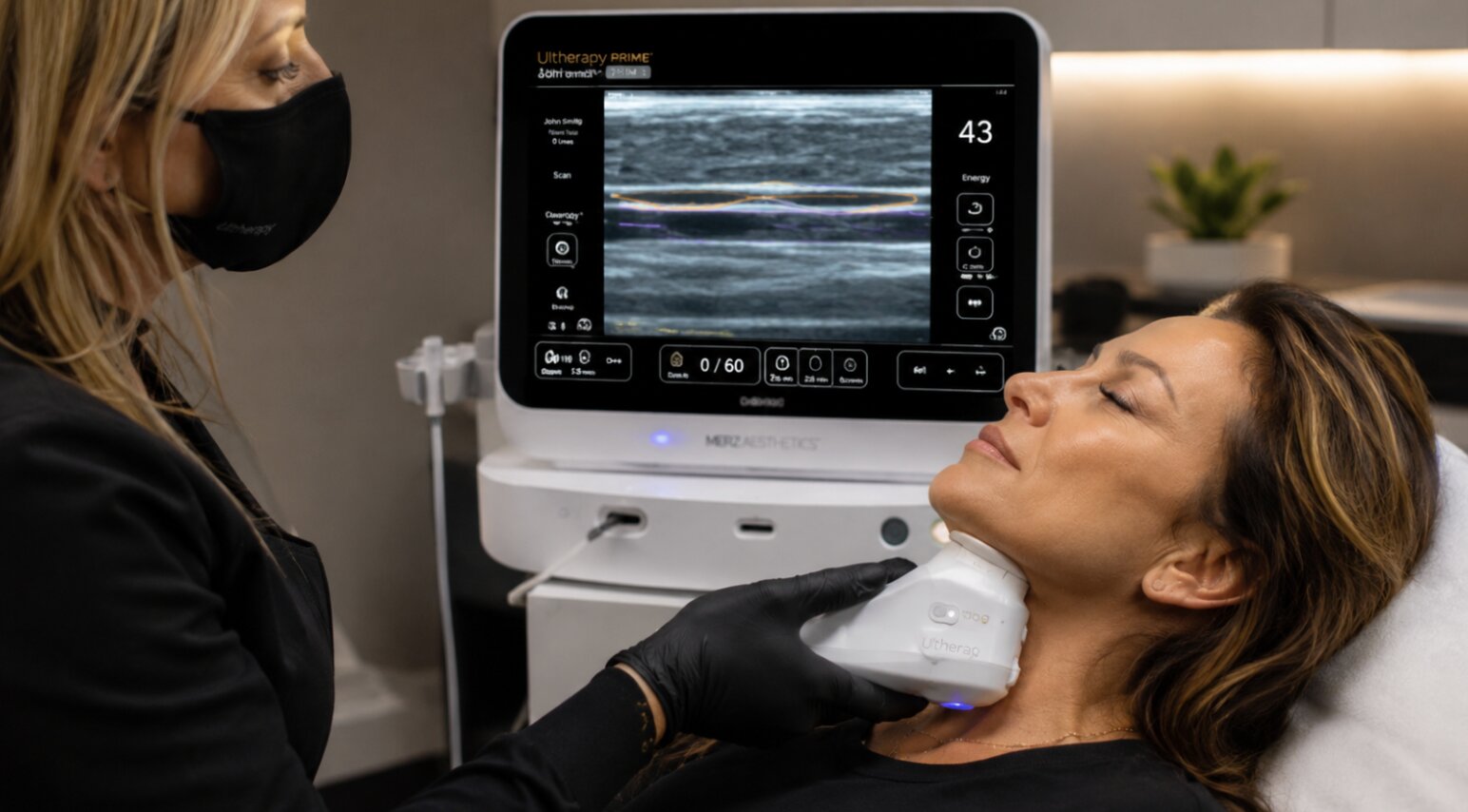 Ultherapy Prime is the updated version of the Ultherapy platform. It continues to use micro-focused ultrasound energy with visualization, while incorporating updated imaging and treatment workflow features designed to support treatment precision and patient experience.
A recent clinical publication evaluating Ultherapy Prime reported visible improvement in jawline and neck skin laxity after treatment, along with positive tolerability findings in treated patients.
Ultherapy Prime still works through collagen stimulation rather than creating an instant surgical result. Patients considering the treatment should understand that improvement develops gradually as collagen and elastin production increase over time.
At DSC Laser and Skincare Center, treatment planning is personalized because skin quality, facial anatomy, and aging patterns differ from patient to patient. Technology matters, but choosing the right treatment for the right candidate matters just as much.
Understanding the technology is important, but many patients also want to know exactly where Ultherapy can be used.
What Areas Can Ultherapy Treat?
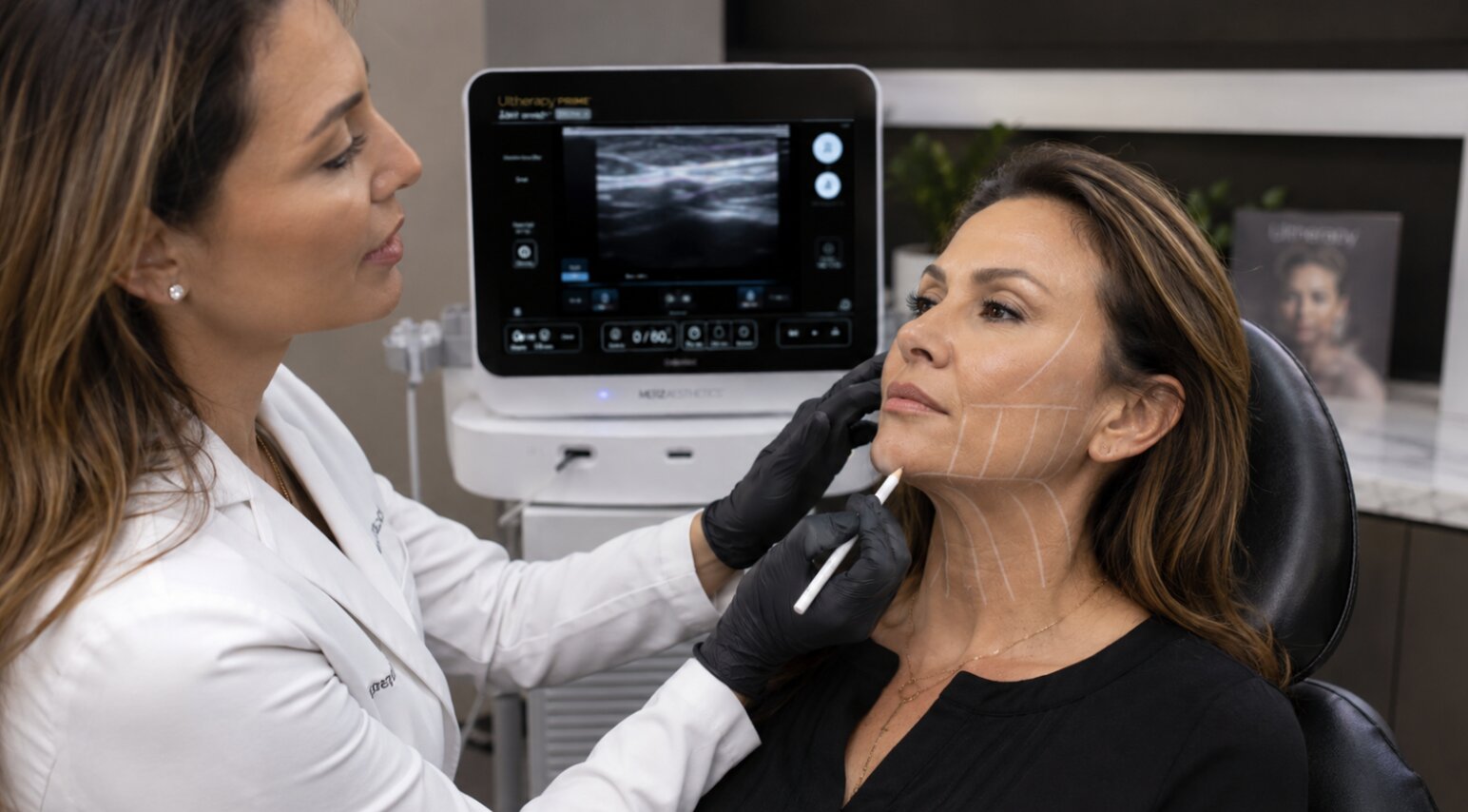 Ultherapy treats areas commonly affected by collagen loss and skin laxity. Treatment recommendations depend on the degree of skin looseness, anatomy, and the patient’s overall goals.
Brow and Upper Face
Ultherapy may help create a subtle lifting effect around the brow area. Patients sometimes choose brow treatment when the upper face appears heavier or less refreshed than before.
The goal is usually a natural-looking improvement rather than dramatic lifting.
Chin and Lower Face
The lower face is one of the most common areas treated with Ultherapy skin tightening. Patients may notice early jowling, softer jawline definition, or loose skin beneath the chin.
Focused ultrasound energy can help stimulate collagen in these deeper support layers to improve firmness gradually over time.
Neck and Lower Neck
Loose skin on the neck is a common cosmetic concern, especially as collagen production slows with age. Ultherapy may help tighten the skin on the neck without surgery or significant downtime.
Décolletage
Ultherapy may also improve lines and wrinkles on the chest. Sun exposure and collagen loss can contribute to visible aging in this area, particularly in Southern California where UV exposure is common year round.
Once treatment areas are identified, patients usually want a realistic understanding of the potential benefits and limitations.
Benefits of Ultherapy Skin Tightening
Ultherapy is often chosen by patients who want a non-invasive treatment option that fits into a busy lifestyle. Many patients return to normal activities shortly after treatment.
Potential benefits may include:
Potential benefits may include:
|
Benefit |
How It May Help |
|
Collagen stimulation |
Supports firmer looking skin over time |
|
Non-surgical treatment |
No incisions or surgical recovery |
|
Minimal downtime |
Most patients return to normal activities quickly |
|
Gradual improvement |
Results often appear natural looking |
|
Multiple treatment areas |
Can treat the brow, lower face, neck, chin, and chest |
Ultherapy may be appropriate for patients who want tighter skin but are not ready for a face lift or more invasive cosmetic procedure.
Results vary by person. Factors such as skin type, collagen production, age, degree of skin laxity, and treatment area all influence outcomes.
At DSC, we often combine treatment planning with other cosmetic and dermatology services when appropriate, including lasers, RF microneedling, injectables, facials, and medical-grade skincare.
Understanding the benefits helps set expectations, but comfort during treatment is another important part of the decision-making process.
Is Ultherapy Painful? What to Expect During the Procedure
Ultherapy is non-surgical, but some patients do experience temporary discomfort during treatment. Sensation varies based on the treatment area, energy level, and personal sensitivity.
Treatment typically begins with a consultation and skin assessment. During the appointment, the provider evaluates skin laxity, discusses goals, and determines whether Ultherapy or Ultherapy Prime is appropriate.
A typical Ultherapy procedure may include:
- Cleansing the treatment area
- Applying ultrasound gel
- Mapping treatment zones
- Using ultrasound visualization beneath the skin
- Delivering focused ultrasound energy into planned treatment areas
Patients often describe the feeling as warmth, tingling, or quick pulses beneath the skin. Areas such as the jawline and under the chin may feel more sensitive.
Clinical findings comparing Ultherapy Prime with earlier Ultherapy systems also reported lower levels of treatment related pain, redness, and swelling in some patients treated with the newer platform.
Most treatment sessions last between 30 and 90 minutes depending on the size of the treatment area. Many patients return to work or daily activities the same day.
Along with understanding comfort levels, patients should also understand possible side effects and treatment limitations.
Side Effects of Ultherapy and Safety Considerations
Ultherapy has a generally favorable safety profile when performed by trained providers, but every cosmetic procedure has possible risks and side effects.
Temporary side effects may include:
- Redness
- Swelling
- Tenderness
- Tingling
- Mild bruising
- Temporary numbness
Published clinical literature on micro-focused ultrasound treatments describes temporary redness, swelling, and tenderness as commonly reported side effects while emphasizing the importance of provider technique and patient selection.
These effects are usually temporary, though healing time varies from person to person.
Ultherapy is not the right treatment for every patient. Severe skin laxity, certain medical conditions, or unrealistic expectations may require a different treatment approach.
At DSC Laser and Skincare Center, patient education is a key part of consultation. We believe patients should understand both the benefits and limitations of any cosmetic treatment before moving forward.
Once recovery expectations are clear, most patients want to know how many treatments they may need.
How Many Ultherapy Treatments Are Needed?
Many patients begin with one Ultherapy treatment session. Because the treatment works through collagen stimulation, visible improvement develops gradually over time.
Some patients notice early firmness within several weeks, while continued collagen remodeling may occur over several months.
The number of treatments may depend on:
- Degree of skin laxity
- Age
- Skin thickness
- Collagen response
- Long term maintenance goals
Clinical data on Ultherapy Prime showed visible improvement in facial and neck laxity after a single treatment session in many patients, although treatment planning still depends on the patient’s skin quality, anatomy, and goals.
Some patients choose maintenance treatments over time as collagen naturally continues to decline with age.
Cost is another important factor patients often consider before scheduling treatment.
Cost of Ultherapy in Los Angeles
The cost of Ultherapy in Los Angeles can vary based on the treatment area, number of treatment lines used, provider expertise, and overall treatment plan.
Smaller areas such as the brow generally cost less than full face and neck treatments.
Factors that may affect pricing include:
- Treatment area size
- Degree of skin laxity
- Technology platform
- Provider training and experience
- Combination treatments
- Overall treatment goals
When comparing the average cost of Ultherapy, it is important to look beyond price alone. Consultation quality, treatment customization, provider experience, and safety standards all contribute to the overall patient experience.
At DSC Laser and Skincare Center, consultations are designed to help patients understand their options clearly so they can make informed decisions about treatment.
That process starts with determining whether Ultherapy is actually the right fit for the patient’s goals.
Is Ultherapy Right for You?
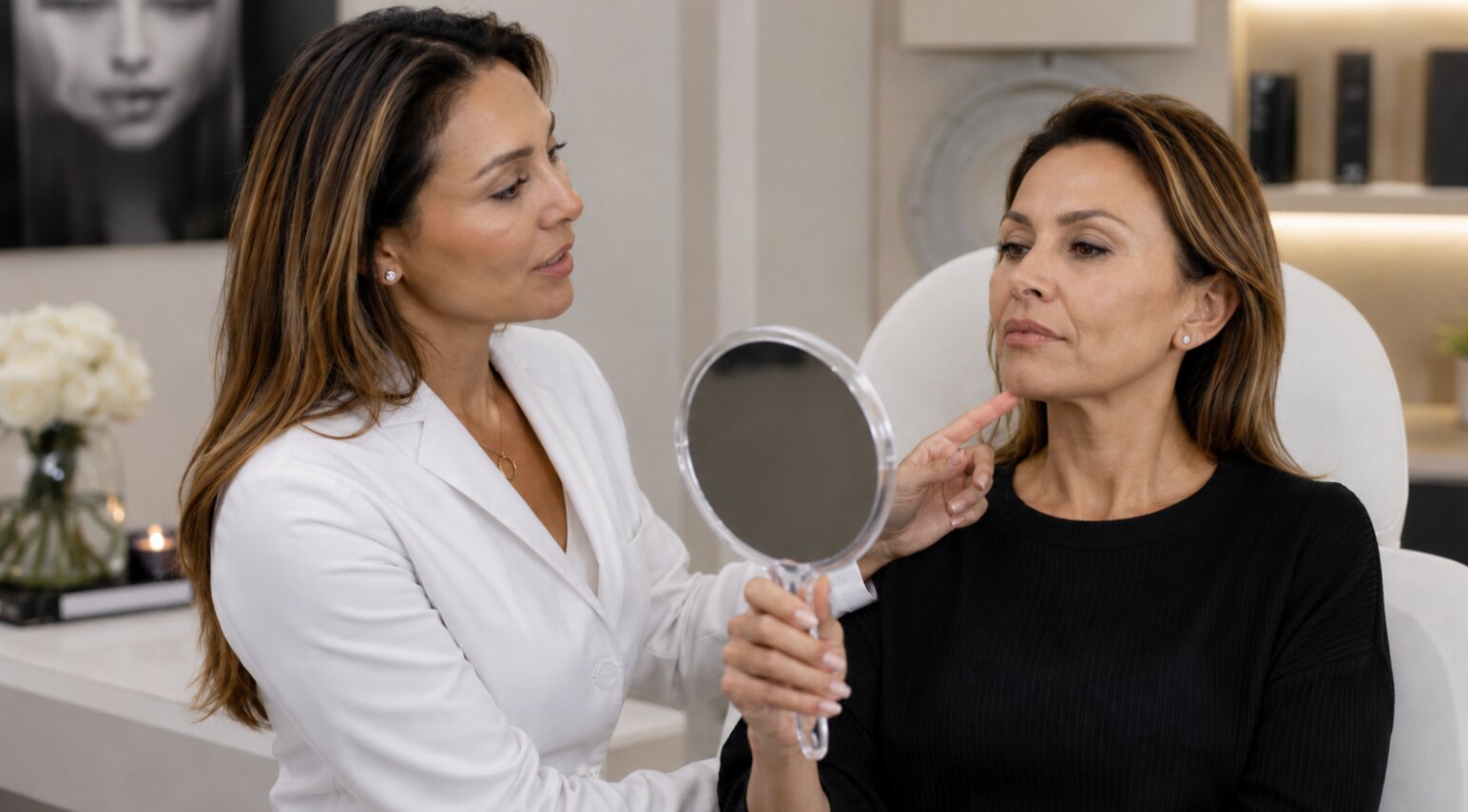
Ultherapy may be a good option for adults with mild to moderate skin laxity who want a non-invasive treatment with little to no downtime.
You may be a candidate if you notice:
- Mild sagging along the jawline
- Loose skin under the chin
- Early neck laxity
- Brow heaviness
- Less defined facial contours
- Skin that feels less firm than before
Patients with more advanced skin laxity may require a different treatment approach to achieve their desired outcome.
At DSC, consultations focus on facial anatomy, skin quality, treatment goals, and long term planning rather than recommending one isolated treatment without context.
For many patients in Los Angeles and the San Gabriel Valley, trust in the provider and confidence in the treatment plan matter just as much as the technology itself.
FAQs
1. What is Ultherapy used for?
Ultherapy is used to lift and tighten skin on the brow, lower face, chin, neck, and chest using focused ultrasound energy that stimulates collagen production beneath the skin.
2. What is Ultherapy Prime?
Ultherapy Prime is the updated Ultherapy platform that uses micro-focused ultrasound energy with visualization and enhanced imaging features designed to support treatment precision.
3. Is Ultherapy painful?
Ultherapy may cause temporary discomfort during treatment. Patients often describe warmth, tingling, or short pulses of energy beneath the skin.
4. How long does Ultherapy take to show results?
Results develop gradually because collagen remodeling takes time. Some patients notice improvement within weeks, while more visible changes may develop over several months.
5. How much does Ultherapy cost in Los Angeles?
The cost of Ultherapy in Los Angeles depends on the treatment area, provider experience, treatment plan, and whether additional procedures are recommended.
Why Choose DSC Laser and Skincare Center for Ultherapy Near Los Angeles?
DSC Laser and Skincare Center has served the San Gabriel Valley community for more than 20 years with a focus on cosmetic dermatology, anti aging research, and individualized patient care.
Our team believes aesthetic treatments should support natural-looking improvement while respecting each patient’s anatomy, goals, and comfort level.
Patients throughout Los Angeles and nearby communities often come to DSC because they want experienced guidance, advanced technology, and a treatment plan that feels thoughtful rather than rushed.
Ultherapy and Ultherapy Prime can be valuable tools for non-surgical skin tightening, but the best outcomes come from careful patient selection, realistic expectations, and personalized care.