

Skin can start to feel less firm around the cheeks, jawline, and neck even when your skincare routine stays consistent. For many adults, the question isn’t just how to tighten the skin, but how to do it without surgery, needles, or significant recovery time.
XERF treatment is a noninvasive radiofrequency option that heats targeted tissue at different depths and supports gradual collagen remodeling. At DSC Laser & Skin Care Center, a typical full face and neck plan includes two XERF sessions spaced about 4 to 6 weeks apart.
That schedule is a starting point, not a guarantee for every person. Your skin laxity, treatment area, previous procedures, and goals all matter when determining the right plan.
What You’ll Learn From This Article
- How XERF uses 6.78 MHz and 2 MHz monopolar RF energy
- Why DSC generally recommends two full face and neck treatments
- What may change the number or timing of your sessions
- When collagen remodeling and skin firmness may become noticeable
- What to expect during treatment, including comfort and downtime
Understanding how the technology works makes the treatment schedule easier to understand.
What Is XERF Treatment and How Does It Tighten Skin?
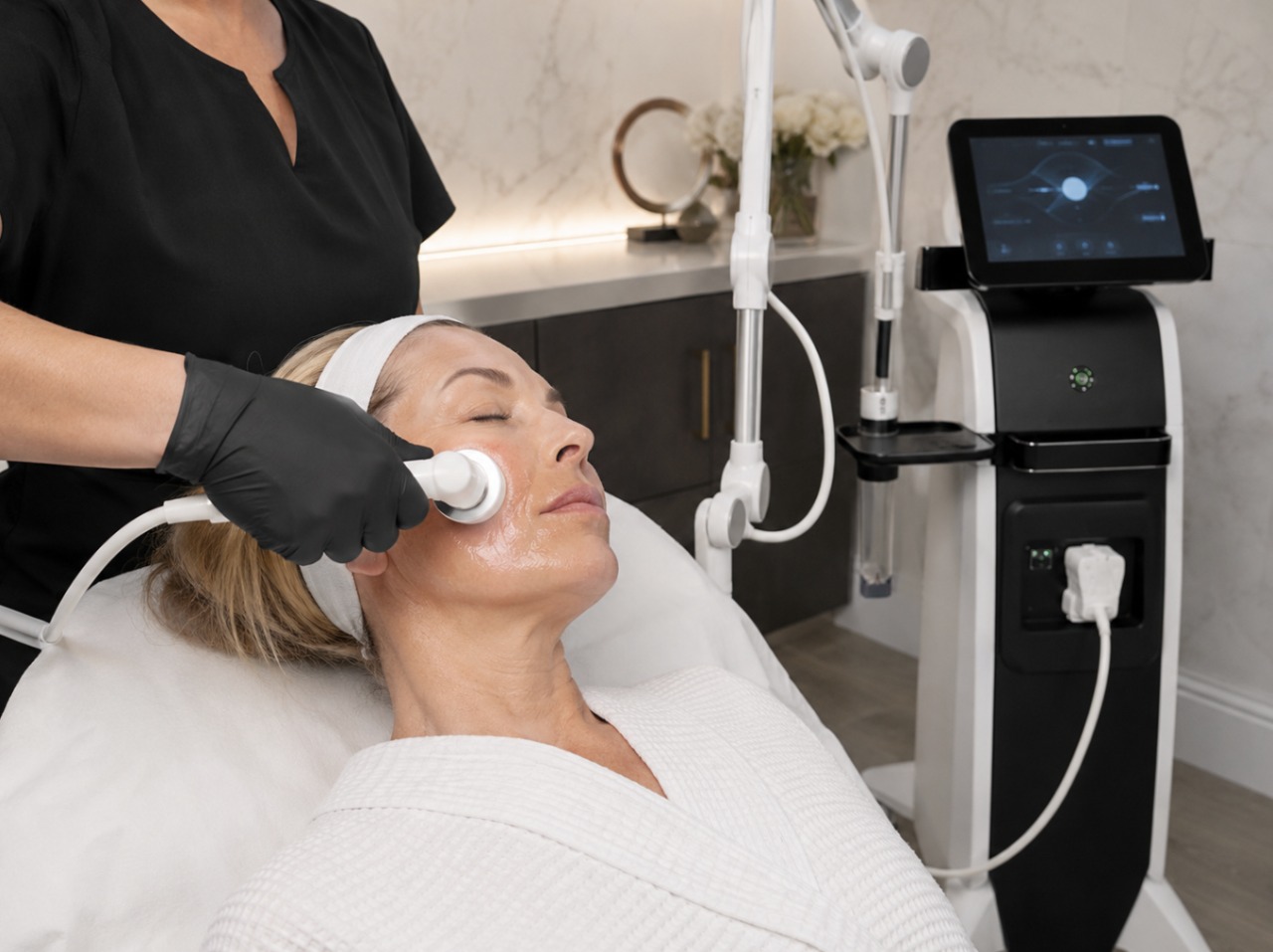
XERF is a skin tightening treatment that uses monopolar radiofrequency rather than laser light. The device delivers controlled RF energy into tissue beneath the skin while using cooling at the surface.
The purpose is to create a controlled thermal response that can affect existing collagen and support the production of new collagen over time.
How Multifrequency Monopolar RF Works
XERF uses two radiofrequency frequencies, 6.78 MHz and 2 MHz. These settings allow energy to reach different tissue depths depending on the treatment plan.
Because XERF is a monopolar RF treatment, energy travels from the treatment handpiece through the targeted tissue toward a return pad placed on the body. No needles enter the skin.
The provider can adjust treatment depth and energy delivery according to the area being treated, the degree of skin laxity, and the patient’s individual needs.
Why Collagen Remodeling Matters
Collagen provides structural support within the skin. Over time, changes in collagen quantity and organization can contribute to sagging, fine lines, and reduced skin firmness.
Radiofrequency heating can cause early changes in existing collagen fibers while also triggering a longer remodeling response. In a histologic study of monopolar radiofrequency, researchers observed changes in collagen density and structure at two and six months after treatment.
That delayed response helps explain why XERF shouldn’t be judged only by how the skin looks immediately after an appointment.
Once that timeline is clear, the next question is how many treatment sessions are usually needed.
How Many XERF Treatments Do You Need?
For patients researching XERF treatment in L.A., this is often the deciding question.
At DSC Laser & Skin Care Center, we usually recommend two treatments for a complete face and neck plan, spaced about 4 to 6 weeks apart. A full face and neck session may involve about 900 treatment shots, while smaller areas may require a different treatment pattern.
DSC’s Typical Face and Neck Schedule
A general treatment timeline may look like this:
| Treatment Stage | Typical Timing | What to Expect |
|---|---|---|
| First XERF session | Week 0 | RF energy is delivered according to the treatment area and selected depth |
| Early response period | Weeks 1 to 4 | Skin may begin to feel firmer while collagen remodeling starts |
| Second XERF session | About weeks 4 to 6 | The planned treatment course continues |
| Ongoing remodeling | Following months | Collagen changes may continue developing gradually |
The number of shots used in one appointment differs from the number of treatment sessions you need. Shots refer to individual applications of RF energy during the procedure.
Can One XERF Treatment Be Enough?
Some people may notice a tightening effect after one session, but responses vary.
A prospective study of monopolar RF followed 30 participants with mild to moderate lower facial skin laxity after one treatment. Researchers reported continued improvement at one, three, and six months.
That study used a different monopolar radiofrequency device, so its results should not be treated as a direct prediction of XERF results. It does, however, support the broader understanding that RF-related changes may continue well after treatment day.
This is also why DSC’s two-treatment recommendation should be part of a larger treatment plan rather than a fixed rule for every patient.
What Can Change Your XERF Treatment Plan?
Two sessions may be the usual starting point for a full face and neck treatment, but several factors can affect how your provider plans care.
The goal is to match the treatment to your skin rather than simply follow the same protocol for everyone.
Degree of Skin Laxity
Mild softness along the jawline may respond differently from more established sagging in the lower face or neck.
Monopolar RF is generally discussed for mild to moderate skin laxity. If laxity is more advanced, another treatment or a combined approach may make more sense than adding repeated RF sessions.
Treatment Area
The cheeks, jawline, area beneath the chin, and neck have different tissue characteristics.
A provider may adjust depth, coverage, and energy based on the area being treated. A partial treatment may also have a different plan from a full face and neck session.
Age and Skin Condition
Age matters, but it does not tell the whole story.
Sun exposure, genetics, lifestyle, previous treatments, skin thickness, and existing collagen changes may all influence how your skin responds to tightening treatments.
Previous Aesthetic Procedures
Tell your provider if you have had:
- Other radiofrequency treatments
- Ultrasound skin tightening
- Dermal fillers
- Biostimulators
- Laser skin treatments
- RF microneedling
- Facial surgery or other procedures
This information can affect timing and may influence which treatment is most appropriate next.
Your Goals
Some patients want subtle maintenance. Others are more concerned about early sagging, fine lines, or loss of skin firmness.
A consultation helps determine whether XERF fits the concern you want to address or whether another option would be more appropriate.
Those individual factors matter because the skin keeps responding long after the treatment handpiece is removed.
When Do XERF Results Develop?

Radiofrequency tightening is not an instant lifting procedure. The skin’s response develops in stages.
Some patients may notice an early feeling of firmness, while other changes appear more gradually as collagen remodeling progresses.
Early Tissue Response
Controlled heating can cause existing collagen fibers to contract. This may contribute to a temporary tightening effect shortly after treatment.
The degree of visible change varies from person to person, and early changes should not be confused with the final outcome.
Ongoing Collagen and Elastin Changes
The longer phase involves tissue remodeling and new collagen formation.
A review of monopolar radiofrequency and collagen remodeling describes biological changes that can continue for several months after treatment. This helps explain why skin firmness may continue to change even after the treatment series is complete.
For that reason, scheduling additional sessions too quickly may not give enough time to understand how your skin is responding.
The spacing between appointments also shapes the treatment experience from start to finish.
What Happens During a XERF Treatment at DSC?
A XERF appointment delivers radiofrequency energy without needles or surgical incisions.
At DSC, treatment planning starts with an assessment of the skin, treatment area, and goals before applying energy.
Preparing the Treatment Area
Clean and dry the skin before treatment.
A return pad is placed on the body because XERF uses monopolar radiofrequency. The provider then applies ultrasound gel to the treatment area to help the handpiece move smoothly and maintain consistent contact.
Delivering RF Energy
The provider moves the applicator across the planned treatment area in a controlled pattern.
XERF can deliver 6.78 MHz and 2 MHz RF energy at different depths. The system also uses integrated cryogen delivery to cool the skin during treatment.
Select treatment settings based on the patient’s anatomy, skin condition, treatment area, and tolerance. Higher energy does not automatically mean a better result.
Comfort and Downtime
XERF does not use needles, and DSC generally performs the treatment without topical numbing.
The cooling system is designed to manage surface heat while RF energy is delivered below the skin.
DSC describes the procedure as having no expected downtime, although individual reactions can vary. Temporary warmth, redness, or sensitivity may occur after radiofrequency treatment.
Treatment time can range from roughly 30 minutes to more than an hour depending on the area covered.
Comfort is important, but candidacy and safety deserve equal attention before treatment begins.
Who May Be a Good Candidate for XERF?
XERF may be considered for adults with mild to moderate skin laxity who want a noninvasive option.
Common concerns may include:
- Early softness along the jawline
- Mild sagging around the lower face
- Reduced skin firmness
- Laxity beneath the chin
- Neck laxity
- Fine lines associated with skin aging
XERF will not address every cause of facial aging.
For example, significant facial volume loss may call for a different approach. Pigment concerns, acne scarring, deeper wrinkles, or advanced tissue laxity may also respond better to other skin treatments or a combined plan.
DSC offers several technologies across laser treatments, injectables, RF, ultrasound, facials, and body treatments. That broader menu allows the team to recommend care based on the concern rather than forcing one device to do everything.
Knowing who may benefit also makes it easier to understand why screening is part of the process.
XERF Safety and Treatment Limitations
Noninvasive treatments still require appropriate screening.
DSC advises patients to discuss their complete medical history, previous treatments, implanted medical devices, and current skin concerns before proceeding.
Pregnancy and certain implanted battery-powered medical devices, including pacemakers, may make XERF inappropriate.
Patients should also tell the provider about recent procedures, active skin problems, medications, and other medical conditions that could affect treatment planning.
Temporary warmth, redness, or sensitivity may occur after RF treatment. The type and degree of side effects can vary by patient and by the treatment settings used.
XERF should be performed with appropriate patient selection, careful energy delivery, and professional monitoring.
The safety discussion is also where DSC’s experience and treatment philosophy matter most.
Why XERF Treatment at DSC Is Personalized

DSC Laser & Skin Care Center serves patients from San Gabriel, Los Angeles, Alhambra, Pasadena, Arcadia, Monterey Park, and nearby communities.
The center’s approach focuses on the face and skin as a whole, rather than treating one concern in isolation.
DSC’s board-certified doctor has more than 30 years of clinical experience and has participated in international cosmetic dermatology education and research. The staff also receives ongoing education on treatment protocols and newer technologies.
That background matters when a patient has several possible treatment options.
One person may be well suited for XERF. Another may benefit more from ultrasound tightening, RF microneedling, laser treatment, injectables, or a combination based on skin condition and goals.
A personalized assessment allows the team to consider your skin laxity, treatment history, facial structure, comfort preferences, and desired level of improvement before recommending a plan.
With that context, the most common questions about treatment count become easier to answer.
Frequently Asked Questions About XERF Treatment
1. How many XERF treatments do I need for my face and neck?
DSC generally recommends two complete XERF treatments for the face and neck, usually spaced about 4 to 6 weeks apart.
Your plan may differ depending on skin laxity, treatment area, prior procedures, and your goals.
2. How long should I wait between XERF treatments?
A typical DSC schedule places the second treatment approximately 4 to 6 weeks after the first.
This interval gives the skin time to begin responding to the initial RF treatment before the next session.
3. Can I see results after one XERF treatment?
Some patients may notice early firmness after one session, but visible changes can continue gradually as collagen remodeling develops.
Timing and improvement vary, so one person’s response shouldn’t predict another’s.
4. Does XERF treatment require numbing or downtime?
DSC generally performs XERF without needles or topical numbing.
The treatment uses integrated cryogen cooling, and DSC describes it as having no expected downtime. Some patients may still experience temporary redness, warmth, or sensitivity.
5. Is XERF better for mild or severe skin laxity?
XERF is generally considered for mild to moderate skin laxity.
If sagging is more advanced, a provider may recommend another tightening treatment, a combination approach, or a different procedure rather than simply increasing the number of XERF sessions.
These answers offer a useful starting point, but the final decision should come from an individual assessment.
Building the Right XERF Treatment Plan in L.A.
For a complete face and neck treatment at DSC, the usual starting plan is two XERF treatments approximately 4 to 6 weeks apart.
The skin’s response does not stop after the second appointment. Collagen remodeling can continue for months, which means the final tightening effect may develop gradually.
Your treatment area, degree of skin laxity, previous procedures, skin condition, and goals all influence what makes sense for you.
If you are considering XERF treatment in L.A., you can request a free consultation with DSC Laser & Skin Care Center in San Gabriel. The DSC team can assess your skin and discuss whether XERF, another skin-tightening treatment, or a broader aesthetic plan fits your needs.
