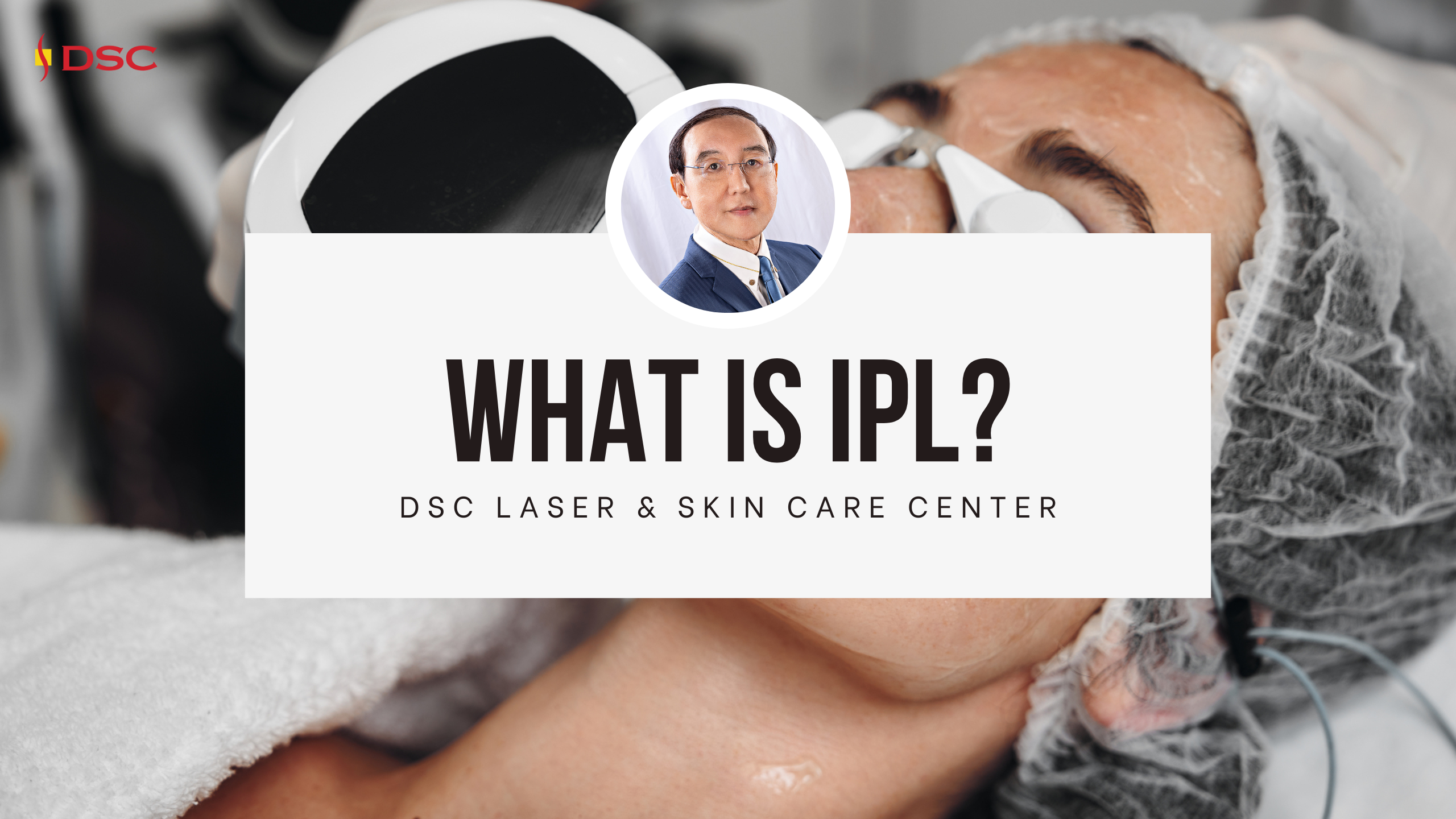
IPL is a very common “laser” treatment that was one of the first to be widely used for various skin treatments. IPL stands for intense pulsed light. These are named for the bright flashes of light that occur duringuse. This characteristic bright light is because IPL lasers usually range in wavelength from 500nm – 1200nm, which falls in the visible light spectrum. Thus, IPL treatments necessitate eye protection for both providers and patients. The term “photo facial” usually refers to an IPL treatment, although this term may have since been coopted for other laser treatments as well.
How does IPL work?
IPL emits broad spectrum light and work by utilizing filters to emit specific wavelengths, each intended to target different chromophores in the skin. Targeted chromophores can be melanin (for pigmentation or hair removal), hemoglobin (for redness), or even water. Selective targeting of chromophores in the skin allows for their removal without harm to surrounding areas. This principle is true for all other laser treatments for the skin. This is why treatment of different issues requires treatment with different wavelengths.
How is IPL different from other lasers?
IPL are differentiated from other lasers by their pulse duration and featured wavelengths. Pulse width or pulse duration is the length of time between the start and end of a laser pulse. For IPL lasers, pulse duration is usually in the range of milliseconds, which is 1 x 10^-3 seconds. Pulse duration in milliseconds is considered relatively long when compared to those of Q-Switch or pico lasers. These other lasers can feature pulse duration in the range of nanoseconds, which is 1 x 10^-9 seconds, or even in the range of picoseconds, which is 1 x 10^-12 seconds.
Because IPL lasers generally work by using physical filters to emit desired wavelengths, one device can emit several different wavelengths. Other lasers are generally constrained to much fewer wavelengths, depending on the lasing medium used to create the laser energy.
What can IPL treat?
Because IPL lasers can generally be operated in several different wavelengths, they can be used to treat a variety of skin issues: redness, rosacea, broken capillaries or other vascular lesions, mild to moderate acne and/or associated PIH or PIE, sun damage or other signs of photoaging, benign pigmented lesions, and even remove unwanted hair. More advanced IPL treatments can even stimulate collagen generation and improve skin quality.
Treatment providers will pick the wavelength and treatment settings for individualized skin concerns. This allows for selective targeting of hair, vascular lesions, and/or pigmented lesions. The IPL energy selectively damages the targeted hair follicles, collapses unwanted vessels, or breaks down pigmented lesions. For the treatment of acne, the laser energy can kill the bacteria associated with acne vulgaris via heat as well as help reduce post inflammatory erythema or post inflammatory hyperpigmentation. Different treatment targets require different wavelengths, which is why IPL lasers often come with the option to choose between several different wavelengths.
Who is a good candidate for IPL?
In the correct skin types, IPL can be a very effective laser treatment for a variety of skin concerns. However, because of its relatively long pulse duration, there is a risk of post-treatment hyperpigmentation in certain skin types, especially in skin types IV, V, and VI. In general, the longer the duration of each laser pulse, the more risk there is of overheating treated skin and causing unwanted side effects like hyperpigmentation or even burns. This is simply because the longer the duration of each pulse, the more time that laser energy is being applied to the skin.
Treatment providers must tune laser settings with patient skin type in mind (this is true for ALL lasers), but especially so in lasers with longer duration times to mitigate development of undesirable post-treatment complications. These settings include spot size, fluence, time between subsequent pulses, pulse duration, and even wavelength. If the settings of an IPL laser cannot be tuned to accommodate a specific skin type or to safely treat individual skin conditions, it is necessary to consider other, non-IPL lasers or even non-laser solutions.
What are common IPL lasers?
Some common IPL devices in the USA include: M22 from Lumenis, BBL from Sciton, Icon from Cynosure Lutronic, Spectrum from Rohrer Aesthetics, and Nordlys from Candela. This is not an exhaustive list, as there are many, many IPL lasers on the market, some of which may be available internationally but not in the USA. There are many purported home IPL devices as well, but care must be taken with use to prevent unwanted side effects.
What is an IPL treatment like?
If necessary, topical numbing can be applied to the skin for several minutes to make treatment more comfortable. Cold water-based gel will be applied to treatment areas to cool and protect skin. Eye protection in the form of eye shields or laser goggles will be supplied. Each pulse may feel like heat or like a rubber band snapping. Depending on treatment, there may be some redness or minor swelling after treatment. Treatment areas may get dark and/or peel for several days after treatment, which is to be expected. Repeat treatments to the same area are necessary in order to treat to satisfaction.
How to prepare for IPL treatment?
As with all laser treatments, avoid sun exposure for a minimum of 2 weeks before treatment. Daily SPF must be worn to protect skin and ensure good results pre and post-treatment. Reschedule your appointment if cold sores are present or if you have recently been ill or have undergone vaccinations. Stop use of active topicals (retinoids, exfoliants, even strong acne products) a few days before and after treatment to prevent undue skin irritation. Accutane and pregnancy are contraindications for treatment.
Read More: How to Prepare for Laser Treatments
What is IPL post-treatment care?
Avoid very hot water, steam, saunas, and heavy exercise for at least 24 hours post-treatment to prevent additional irritation. Active topicals and exfoliants should not be used for several days post-treatment. Do not pick or scratch peeling skin. Daily use of SPF is highly recommended. Do not schedule laser treatments within two weeks of injectable treatments, facials, etc.
Frequently Asked Questions
1. What is IPL and how does it work to improve skin?
IPL stands for intense pulsed light, a broad-spectrum light treatment that uses physical filters to emit specific wavelengths targeting different chromophores in the skin. Depending on the wavelength chosen, IPL can selectively target melanin to address pigmentation or hair, hemoglobin to reduce redness, or water for collagen stimulation. Because the light is absorbed only by the targeted chromophore, surrounding tissue is left unaffected. This makes IPL a versatile, non-invasive option for treating a wide range of skin concerns in a single device.
2. What skin conditions can IPL treat at a laser clinic in Los Angeles?
IPL is effective for treating redness, rosacea, broken capillaries, vascular lesions, mild to moderate acne, post-inflammatory erythema, post-inflammatory hyperpigmentation, sun damage, photoaging, benign pigmented lesions, and unwanted hair. More advanced IPL settings can also stimulate collagen production to improve overall skin quality and texture. Because the device can operate across multiple wavelengths, a provider at DSC Laser & Skin Care Center in San Gabriel can tailor each session to your specific combination of concerns, rather than addressing only one issue at a time.
3. Is IPL safe for all skin types, or are some people better candidates than others?
IPL is most effective and carries the least risk for lighter skin types. Because IPL pulses last in the millisecond range, the skin is exposed to heat for a relatively longer period compared to pico or nanosecond lasers. This increases the risk of post-treatment hyperpigmentation, burns, or other side effects in darker skin tones, particularly types IV, V, and VI. Providers must carefully adjust settings including spot size, fluence, and pulse duration for each patient. In some cases, a different laser or non-laser treatment may be the safer and more appropriate choice.
4. How should I prepare for an IPL treatment in San Gabriel?
Avoid sun exposure for at least two weeks before your IPL appointment and wear daily SPF consistently in the weeks leading up to treatment. Stop using active topicals such as retinoids, exfoliants, and strong acne products a few days beforehand to reduce the risk of irritation. Reschedule if you have an active cold sore, have been recently ill, or have had a recent vaccination. Accutane use and pregnancy are contraindications for IPL, so inform your provider of any medications or changes in health before proceeding with treatment.
5. What should I expect during and after an IPL photo facial session?
During treatment, a cooling gel is applied to the skin and both you and your provider will wear eye protection due to the bright light emitted. Each pulse may feel like a warm snap against the skin. Mild redness or swelling can occur directly after, and treated areas may darken and peel over the following days, which is a normal part of the process. Avoid hot water, steam, saunas, and intense exercise for at least 24 hours post-treatment, and hold off on active skincare ingredients for several days. Multiple sessions are typically needed for full results.
6. Is IPL worth it for rosacea and redness, or are there better options in San Gabriel?
IPL is one of the most well-established treatments for rosacea and persistent facial redness because it targets hemoglobin directly, collapsing unwanted vessels without damaging surrounding skin. For patients with lighter skin tones where IPL settings can be safely applied, it can produce meaningful, lasting reductions in redness with minimal downtime. However, suitability depends on your specific skin type and the severity of your condition. A complimentary consultation at DSC Laser & Skin Care Center in San Gabriel can help determine whether IPL alone or a combination approach will deliver the best outcome for your skin.
For IPL treatments in Los Angeles, give DSC a call! We have dedicated consultants who can answer all your questions about IPL or can help determine if IPL is the right laser treatment for you.
DSC Laser & Skin Care Center
www.dscbeauty.com
(626)285-0800
info@dscbeauty.com
889 S. San Gabriel Blvd, San Gabriel, CA 91776